AI Did Not Replace Taste. It Changed the First Step.
Some people say:
“Marketing is dead.” “Brand designers are dead.”
I do not think that is true.
After testing the brandkit skill, I do not think AI replaced taste, designers, marketers, or creative judgment.
But I do think something changed:
AI changed the first step.
Branding is just one example.
I am not a marketing person.
I am not a brand designer.
But with the right process, I was able to get to a direction that was good enough to evaluate.
That is the interesting part.
Not that AI created a perfect brand.
Not that AI replaced a designer.
Not that everyone should stop hiring people with taste.
The interesting part is that the distance between a blank page and a useful first draft became much smaller.
Branding as the example
I have visited and worked with companies on brand kits, logos, campaigns, and visual systems. Depending on the company and the level of detail, that process can take anywhere from one week to two months.
And that makes sense.
Good branding is hard.
I have also worked with great designers, including Sam Guimarães, on my personal brand and company branding. So I know how much thinking, taste, iteration, and detail go into creating a strong visual identity.
That is why this test surprised me.
After a 30-minute interview using grill-me from Matt Pocock’s skills repo, the Brand Kit skill generated a direction, logo ideas, and visual concepts in a few minutes.
Was it perfect?
No.
Was it final?
No.
Was it good enough to give me a strong sense of the project?
Yes.
Here is part of what came out of that first pass:
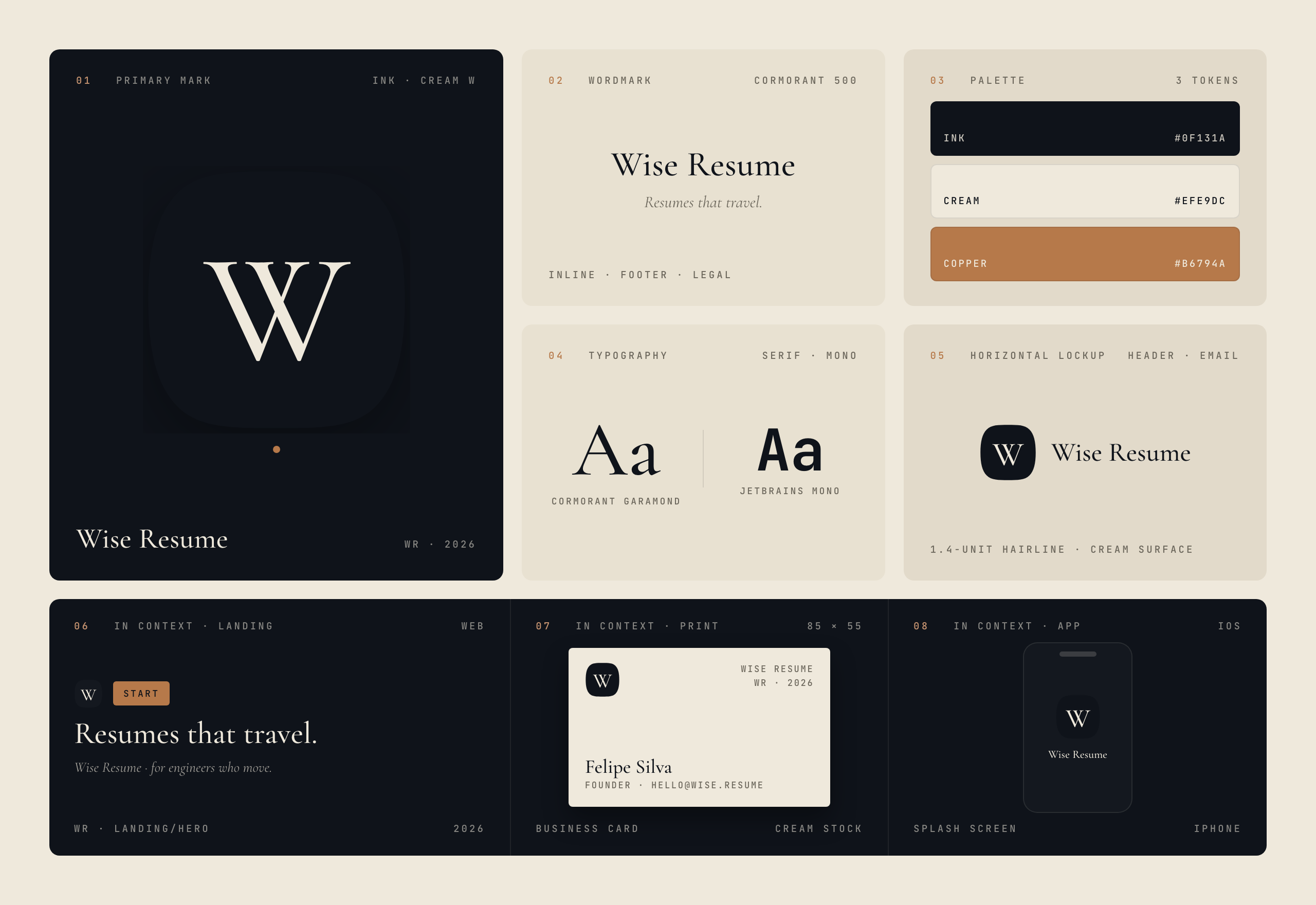
And for startups, that changes the starting point.
The first draft used to be expensive
My experience is mostly in startup environments, and I tend to think about building companies with a “plumbing-first” mindset.
Do not spend months waiting for the perfect version before learning from the market.
Get the essentials in place:
- A clear goal
- A simple product
- A landing page
- A basic visual identity
- A first marketing message
- A way to collect feedback
You can build an application in black and white.
But once you go to market, you need the product to feel real enough for someone to understand it, trust it, and react to it.
Traditionally, even reaching that point could cost thousands of euros and take weeks or months.
Now, a founder can get a decent first direction in 30 minutes.
Not the final brand.
Not the perfect logo.
Not the masterpiece a top designer would create.
But something real enough to test.
Taste still matters
AI can generate options.
It can make the first direction faster.
It can help someone who is not a designer see possibilities.
But it cannot fully understand context the way a strong human designer can.
It does not bring years of taste, judgment, culture, emotion, business understanding, and lived experience.
That is still the work.
The difference is where the work starts.
Before, a team might spend weeks just getting to the first thing they could react to.
Now, AI can help produce that first thing quickly.
Then taste becomes even more important.
You still need to choose.
You still need to refine.
You still need to know what feels right, what feels cheap, what fits the company, and what will connect with the market.
AI does not remove that responsibility.
It moves it earlier.
The shift
The future is not “AI replaces designers.”
The future is not “AI replaces marketers.”
The future is that people who combine taste, speed, strategy, and AI tools will move faster than everyone else.
Branding was the example for me.
But the same pattern applies to many parts of building:
- Product ideas
- Landing pages
- Campaign concepts
- Technical prototypes
- Internal tools
- Sales messages
- Customer research summaries
AI is changing the cost of starting.
For startups, that is huge.
Done is better than perfect.
But now, the first version of done can look a lot better than before.